| Premier Wen Jiabao Meets the Press |
| 2011-03-14 11:12 |
|
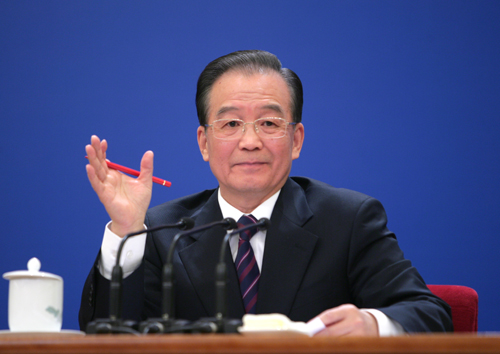
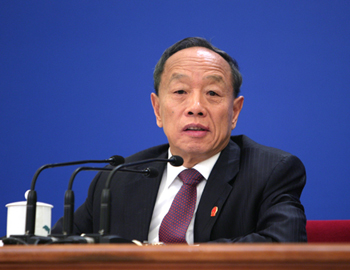
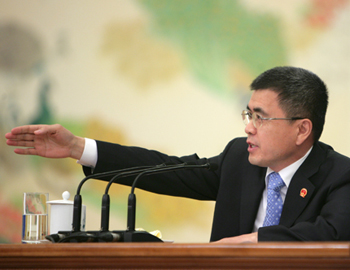
On the morning of 14 March, the Fourth Session of the Eleventh National People’s Congress held a press conference in the Great Hall of the People. At the invitation of Mr. Li Zhaoxing, spokesman of the NPC Session, Premier Wen Jiabao of the State Council met Chinese and foreign journalists and answered their questions. Premier Wen Jiabao: Friends of the press, good morning. The just concluded session of the National People’s Congress adopted the government work report and the outline of the 12th Five-Year Plan. We face extremely daunting tasks and complex domestic and international situations. We must work very hard if we are to achieve success in our work on all fronts and meet the goals we set. We must be fully mindful of potential dangers and keep a cool head. At the same time, we should have firm confidence. Confidence is like the sun. It brings us brightness and hope. There are two years left in my term of office. I know full well that my work in the next two years will not be easier than any of the previous years. “I do my job as diligently as a farmer tends to his field. I have it on my mind day and night. I work for a thorough planning at the start. And I’m determined to carry it through to a successful end.” People’s Daily: We have noted that the 12th Five-Year Plan has set an annual GDP growth target of 7% for the next five years. That target is 0.5 percentage point lower than the one set out in the 11th Five-Year Plan. Mr. Premier, what is the consideration of the government in taking the initiative to adjust downward the GDP growth target? Will a slower economy affect the government’s efforts to expand employment and improve people’s well-being? Premier Wen Jiabao: We have set a lower GDP growth target for the next five years. I believe this shows the resolve and will of the government. It is also a major step the government is determined to take. This means that in the next five years and even for a much longer time to come, we will take the transformation of China’s economic development pattern as our priority task to refocus China’s economic development on scientific and technological advances and higher educational level of the labor force and raise the quality and efficiency of China’s economic development. The speed of economic growth, employment and inflation are closely interconnected. A higher growth speed will bring more jobs but at the same time increase inflationary pressure. A lower growth speed means fewer jobs yet relatively lower inflationary pressure. But an economic recession may easily occur. We must strike a proper balance between these two and take an integrated approach to ensure a bright future for China’s economic development. We must seize this opportunity and make adjustments to China’s economic structure to resolve the long-standing problem in China’s economic development, i.e. lack of adequate balance, coordination and sustainability. And we must balance economic development with population, the environment and resources. I also want to point out that a 7% growth target is not a low target. You have noted that China’s economic aggregates have been expanding. That means we have an increasingly large base figure. Therefore it will not be easy for us to achieve 7% GDP growth with quality and efficiency. With respect to jobs, I would like to say that we must pay close attention to economic restructuring. In this course, we should give priority to the development of small and medium-sized enterprises, in particular, high-tech enterprises, and the development of the service sector, including producer services. All these will help us create more jobs. The government will make every effort to cope with rising employment pressure in a slower economy. This is a great test to the government. But we have the determination to succeed. Le Point of France: Mr. Prime Minister, North Africa has been experiencing tremendous changes since the beginning of the year. The world is now observing China, which is pursuing its course. Can we say that China has created its own model in terms of politics, economy and culture? How is this model going to adapt to the new environment? Can other countries be inspired by this model? Premier Wen Jiabao: We have followed closely the political turbulence in some west Asian and north African countries. At the same time, we take the view that it is not right to draw an analogy between China and those relevant countries. With over 30 years of reform and opening-up, China has achieved rapid economic and social development. The lives of the Chinese people have been markedly improved. These achievements have been widely recognized. I believe the Chinese people have also seen that the government has taken serious steps to address the problems in economic and social development. It is true that recent years have witnessed major changes in China’s economy. The Chinese economy has become the second largest in the world. But we are fully aware that China remains a developing country with a large population, weak economic foundation and uneven development. We have embarked on a development path that fits China’s national conditions. The main features of this development path are as follows: First, we must focus on economic construction and vigorously promote economic development and social progress. Second, we must continue to put people’s interests first and strive for comprehensive, coordinated and sustainable development. Third, we must continue to promote social fairness and justice and maintain social stability and harmony. And fourth, we must protect the democratic rights of the people, promote their all-round development and give further play to the initiative and creativity of the people. China is still taking exploratory steps with respect to its reform and development. We never consider our own development path as any particular model. We believe that all countries need to pursue their own development paths which are suited to their national conditions and we respect the choices made by the people of other countries. At the same time, we believe that countries can learn from each other in terms of development paths on the basis of mutual respect.
Hong Kong Cable TV: A separate chapter has been devoted to Hong Kong and Macao’s development in the 12th Five-Year Plan. The central government has indicated in the plan that it will continue to support Hong Kong’s role as an international financial center. And further details have been spelled out for a number of large infrastructure development projects between Guangdong and Hong Kong. What is the consideration of the central government in laying out all these arrangements? Some people argue that Hong Kong is losing its traditional advantage and is no longer able to cope with regional competition on its own. And that is why the central government felt compelled to draw up the plan for Hong Kong. What is your view on this? Will these measures taken by the central government be enough to help Hong Kong resolve some of its underlying problems, for example the widening income gap? Premier Wen Jiabao: Your question reminds me of my visit to Hong Kong in 2003. It was during that visit that I witnessed the signing of the Closer Economic Partnership Arrangement (CEPA) between Hong Kong and the mainland. I would like to tell you that I want very much to visit Hong Kong again to see the people in Hong Kong and bring them my greetings. There is a separate chapter devoted to Hong Kong and Macao in the 12th Five-Year Plan. This shows the firm support of the central government for long-term prosperity and stability in Hong Kong and Macao. It meets the aspiration of the governments of the Hong Kong and Macao special administrative regions and the people of all sectors there. It is also in the interest of the long-term development of Hong Kong and Macao. You said in your question that Hong Kong has lost its traditional advantage. I take a different view. Hong Kong, with the strong backing of the motherland and facing the world, has an open and free economy. It has a full-fledged legal system that is consistent with international business practices. It has a large pool of managerial personnel in various fields. And it has withstood the test of two financial crises. Hong Kong’s traditional advantage as an international financial center has not changed. It is set out in the 12th Five-Year Plan that the central government will support Hong Kong in developing itself into an offshore RMB business center and an international asset management center. In fact, many of the pilot programs we have taken in the reform of the financial sector in recent years were first conducted in Hong Kong. For example, RMB deposits in Hong Kong have exceeded 300 billion yuan. We have also run the pilot program of settling cross-border trade in goods in RMB first in Hong Kong. Moreover, cooperation between Hong Kong and the mainland, in particular, the Pearl River Delta has been enhanced. Fast progress has been made in a series of infrastructure projects linking Hong Kong and the mainland. All these have facilitated the free flow of goods and personnel between the two sides. I believe these measures will further consolidate and develop Hong Kong’s status as an international financial center. I believe Hong Kong has the ability to cope with not only regional but also international competition and risks. At the same time, Hong Kong is confronted by a complex external environment. Therefore it is important for Hong Kong to be mindful of potential difficulties, make the most of good opportunities and meet the challenges head-on. I have said that Hong Kong needs to pay close attention to the following three things. First, Hong Kong needs to have a long-term and scientific development plan. Second, it needs to attach great importance to addressing the underlying problems in its economic and social development. And third, it should work hard to improve people’s well-being. I believe it is also important for Hong Kong to pay close attention to the development of education and science and technology so as to sustain the momentum of development. Meanwhile, Hong Kong needs to further develop the service sector, including financial services and tourism in the light of its actual conditions and develop small innovative high-tech enterprises to create more jobs. Hong Kong has sufficient government revenues and ample foreign exchange reserves. It should further improve the social safety net, and in particular, take good care of the vulnerable groups so that people in Hong Kong will lead a much better life. Let me take a few minutes to address something that you did not mention in your question. That is, during the formulation of the 12th Five-Year Plan, there was such an opinion in Hong Kong that the plan was imposed on Hong Kong. Here I would like to emphasize once again that we will adhere to the principle of “one country, two systems”, “Hong Kong people administering Hong Kong” and a high degree of autonomy. We will act in strict accordance with the Basic Law. What the central government has laid out in the Five-Year Plan about Hong Kong is designed to support Hong Kong’s development. And this arrangement will in no way replace Hong Kong’s own plan. Wall Street Journal: Inflation has become an acutely felt problem in China’s society. The rising consumer and housing prices have had a direct impact on the daily lives of the ordinary Chinese people. I would like to ask how do you evaluate the measures that the government has adopted in response. What new measures will the government take in the future? Will the government consider letting the RMB appreciate faster to fight inflation? Premier Wen Jiabao: Inflation is like a tiger. Once set free, it will be very difficult to bring it back into its cage. I believe that the current inflation is actually a global issue. Let’s take a look at the international environment in this respect. Some countries have pursued a quantitative easing monetary policy. This has caused drastic fluctuations in the exchange rates of some currencies and commodity prices. It has affected not just one place or region. Inflation exceeded 2% even in European countries. In the past few months, the global grain prices rose by 15%. And the situation in some north African and west Asian countries has driven up global oil prices, which hit 100 US dollars per barrel. Imported inflation has had a big impact on China, and it is a factor that we can hardly control. At the same time, we have witnessed structural inflation in China due to rising labor cost and prices of primary goods. We must pay close attention to this problem and take measures to address it. I often say that inflation, including rising consumer and housing prices, affects the lives and immediate interests of the people. That is why the government has given top priority to curbing inflation in its work this year. I have explained in detail our measures to manage inflation expectations and control inflation in my government work report, so I will not repeat them here. I just want to emphasize that the government has the confidence to manage inflation expectations. In November last year, China’s consumer price index rose by 5.1%. With hard efforts, we brought it down to 4.6% the following month. We still face a difficult situation in the first half of this year. I believe that you are aware of the carry-over effects on the CPI. In January this year, the CPI rose 4.9% and stayed at the same level in February. But the carry-over effect in February was as high as 3.7 percentage points. We must not take this issue lightly. We have taken the following measures to manage inflation expectations. First, develop production, in particular agricultural production to ensure sufficient supply. Second, improve the distribution system, in particular the weak links in the distribution of agricultural products. And third, mainly use economic and legal instruments to maintain good market order. We will make persistent efforts to manage the inflation expectations. Our measures to bring down the rising housing prices are three-fold. First, we must control monetary liquidity. This is actually important for controlling both the housing prices and consumer prices, because it helps eliminate the monetary conditions for surging consumer and housing prices. Second, we will make use of fiscal, taxation and financial instruments to adjust market demand. And third, we will intensify the responsibility of local governments. Local governments must assume their due responsibilities for controlling consumer and housing prices. Governors of provinces will take responsibility for the grain supply and city mayors will be responsible for the supply of non-grain food. Local governments will assume responsibility for bringing down surging housing prices. You are interested in the issue of RMB exchange rate. Let me tell you that we will continue to pursue the reform of RMB exchange rate regime. We have taken three major steps in pushing forward this reform since 1994. Since 1994, the real effective exchange rate of the Chinese yuan has appreciated by 57.9% against the dollar. The main aspect of our reform is to de-peg the Chinese yuan from the US dollar. We pursue a managed, floating exchange rate regime on the basis of market supply and demand and with reference to a basket of currencies. We will continue to make the RMB exchange rate more flexible in the light of the changes in market supply and demand. The reform of the RMB exchange rate regime should be a gradual process, because it affects our businesses and employment situation. We must ensure overall social stability in this process.
Premier Wen Jiabao: On controlling rising housing prices, what’s essential now is to ensure the full implementation of relevant policies and measures. The central government will step up its inspection of the work of local governments. We must implement an accountability system in real earnest. At the same time, we will follow closely and analyze new developments in the real estate market, and study targeted macro-control measures in this field. The local governments must conscientiously perform their relevant responsibilities. For example, they must release policies on regulating the property market and targets for controlling housing prices. Actually, in regulating the real estate market, we have adopted another very important measure. That is, we will further increase the supply of government-subsidized housing units. This means that we will try to address problems in the housing market by increasing supply. With respect to the government-subsidized housing, the people are generally supportive of our policies, though they have also voiced quite some concerns. I would like to say that we have set the target of building 10 million such housing units this year and another 10 million next year. In total, we plan to build 36 million government-subsidized housing units in the next five years. In addition to renovated houses in run-down areas, they mainly comprise public rental housing and low-rent housing. It is essential that we ensure sufficient funding for the construction of those houses. As far as the funding is concerned, the central government will transfer a total of 103 billion RMB yuan in subsidies to local governments this year. Local governments will also increase their fiscal input. We also need to make greater use of non-government capital. It is important that we designate specific sites for the construction of government-subsidized housing and ensure that such designated sites will be used only for this purpose. We need to ensure that the design and construction of those houses will meet high quality standards and will be safe, environment-friendly and energy-efficient. I believe this presents a great opportunity for property development in China. And we must not miss this opportunity. I want to emphasize that we must start now to formulate the management and return mechanisms of the low-income housing and put in place a complete system governing the construction, management and return of these houses to ensure the quality and efficiency and proper management. Munhwa Broadcasting Corporation of the ROK: We have paid close attention to the part in China’s 12th Five-Year Plan about promoting cultural development and prosperity. China is one of the birthplaces of human civilization, and has a time-honored history and cultural tradition. My question is what will China do to give full play to its cultural advantage and boost the country’s soft power. What will be the specific policies taken in this field? Premier Wen Jiabao: I believe the strength of a country lies in not only its economy but also the educational level of its people, cultural development, and moral and ethical standards. China has a 5,000-year cultural heritage. The Chinese civilization has continued uninterrupted despite the many trials and tribulations. Culture is the soul of a nation. And cultural tradition is a strong source of inspiration and cohesiveness. We must bring into full play the strength of China’s cultural heritage and at the same time learn from and draw upon the fine achievements of other civilizations. Only in this way will the Chinese culture enjoy greater development. As I have often said, only an open and inclusive country can be strong. We will further reform and develop our cultural programs on a priority basis during the 12th Five-Year Plan period and for an even longer time to come. We will pursue institutional reform, develop well-trained professionals and further promote the people-oriented cultural programs to boost cultural development and prosperity. We will integrate our cultural heritage with the spirit of the times and combine our efforts to carry forward the Chinese cultural heritage with efforts to draw upon the culture of other countries so that the Chinese culture will continue to brim with vigor and vitality. TVBS of Taiwan: The 12th Five-Year Plan has been adopted. The first meeting of the cross-Straits Economic Cooperation Committee was convened in Taiwan not long ago. How will the 12th Five-Year Plan and the Economic Cooperation Framework Agreement (ECFA) boost the business ties across the Straits? There is concern among some people in Taiwan that with the transformation of the economic development pattern on the mainland, some Taiwan-invested businesses on the mainland may face great difficulties and be marginalized. What is your view? Premier Wen Jiabao: First, I would like to ask you to convey my greetings to the compatriots in Taiwan. The Early Harvest in the ECFA between the two sides of the Taiwan Straits entered into force from 1 January this year. In February, the relevant parties of the two sides conducted a review on the implementation of the Early Harvest. They shared the view that the Early Harvest has got off to a good start, made smooth progress and produced initial results. Cross-Straits trade increased by 30% in January. You may know that last year our trade exceeded 140 billion US dollars, with Taiwan running a surplus of 86 billion US dollars. In your question, you expressed the worry that Taiwan-invested businesses on the mainland may be marginalized as the mainland economy transforms its development pattern. I wish to tell you that the mainland has become an important destination for Taiwan investment. There are now over 80,000 Taiwan-invested businesses on the mainland, and the total paid-in investment from Taiwan has topped 50 billion US dollars. If we include the trans-investment made through a third place such as the Virgin Islands, the total investment from Taiwan will exceed 90 billion US dollars, accounting for 9% of the overseas investment on the mainland. There is no need to have the worry that you just expressed. The pursuit of scientific development and transformation of the development pattern will only create a more favorable investment environment and offer more business opportunities for Taiwan businesses. The Taiwan-invested businesses on the mainland will continue to enjoy national treatment. I don’t think they will be marginalized. Rather, I believe they will enjoy brighter prospects for development. I want to add that we may encounter some issues in the implementation of ECFA. We will continue to pursue the follow-up negotiations in a step-by-step way. I believe the people in Taiwan will see the sincerity of the mainland and its care for the interests of the business community and people in Taiwan. We are compatriots. “Nothing can sever the blood ties of brothers.” CNN: Premier Wen, you have served as Premier for eight years now and maybe you will step down in Premier Wen Jiabao: Your first question comes a bit prematurely. There are still two years left in my term of office, and I have a heavy agenda. I should continue to do my job diligently on this position as devoted as a soldier. I always have the interests of the country in my mind and pursue no personal gains. I will continue to perform my duties conscientiously. I believe reform is an eternal theme of history. Political restructuring and economic restructuring should be advanced in a coordinated way. This is because, first, nothing in the world stays immutable. “Only reform ensures continuous existence and growth.” It is only with constant reform that our Party and country can enjoy full vigor and vitality. Second, political restructuring serves as a guarantee for economic restructuring. Without political restructuring, economic restructuring will not succeed, and the achievements we have made may be lost. Third, I believe that at present corruption poses the biggest danger. To eliminate the breeding ground of corruption, we must pursue institutional reform. “The hearts of the people are the life of the country.” To address people’s grievances and meet their wishes, we must create conditions for the people to criticize and supervise the government. Fourth, fairness and justice are the defining features of socialism. They constitute the foundation of social stability. We must promote fairness in income distribution and gradually narrow the widening income gap. We also need to promote fairness in the distribution of educational, medical and health care resources so that all the people can share the fruits of reform and development. If we are to achieve all the above-mentioned goals, we must pursue economic and political restructuring. Fifth, we must give each and every one access to education and give full play to people’s independent thinking and creativity. Only when the people feel fully motivated can we put our reform and development endeavors on a solid footing. In this sense, this captures the essence of democracy. People’s deputies are now directly elected at the county level and in cities without sub-districts. Self-administration is practiced in villages. Indirect elections take place at the city level and above. We have multi-candidate elections for members of the CPC Central Committee. We must pursue a step-by-step approach in this process. We should have the confidence that if people can manage well the affairs in a village, they will be able to manage the affairs in a township, and a county. That will be a gradual process. It is by no means easy to promote political restructuring in such a big country with 1.3 billion people. It requires a stable and harmonious social environment and it needs to be taken forward in an orderly way under the leadership of the Party. CCTV: We pay particular attention to the development of private enterprises in China. The State Council has released two sets of 36 guidelines for encouraging and supporting the development of non-governmental investment, raising a lot of hope on the part of private enterprises in China. However, it is also the view of some private enterprises that they have heard loud thunders but seen few raindrops in terms of government support for the non-public sector, or in other words, much has been said, but little has been done. And those businesses still face visible or invisible obstacles in their operation and the problem of the “glass door” has not been well addressed. There is also a view that in China the state-owned enterprises are forging ahead but private ones are falling behind. What is your view, Mr. Premier? Premier Wen Jiabao: Our policy is that we will unswervingly consolidate and develop the public sector of the economy and at the same time, unswervingly support, encourage and guide the development of the non-public sector of the economy. In 2005, the State Council formulated the 36 guidelines on supporting, encouraging and guiding the development of non-public sector. Last year, we introduced the new 36 guidelines on encouraging and guiding the non-governmental investment. I should say that the thunder is indeed loud. We have stated in clear-cut terms that we will treat all enterprises of different ownerships in the same way in terms of laws and policies, including fiscal, taxation, financial and market access policies. We encourage these different economic entities to compete with each other and achieve common development. So why do some private enterprises still feel that they have seen few raindrops and that there still exist such problems as the “glass door” and “swing door”? I think this is mainly because the policies and measures have not been fully implemented. The new 36 guidelines is seen as a supplementary document to the first set of 36 guidelines, because a lot of detailed arrangements have been spelled out in the new 36 guidelines in terms of policy and market access. We are formulating the detailed rules for the implementation of the new 36 guidelines. I believe that these two documents will help boost the development of the non-public sector. I don’t think we have such problem that state-owned enterprises are forging ahead while the private enterprises are falling behind, nor do we have the opposite problem in China. In the past 30 years and more of reform and opening-up, big development has been achieved in both the public sector and the non-public sector of the economy. I don’t want to spend too much time talking about the public sector at the press conference today. With respect to the non-public sector that you mentioned, I would like to point out that now non-public investment accounts for over 50% of the total fixed asset investment and private enterprises in the industrial field have overtaken their state-owned counterparts in terms of the number of businesses, output value, total assets and payrolls. This is a fact that we must recognize. The proportion of the public sector in the total economy is coming down; however, the public sector still holds the lifeline of the national economy. State-owned enterprises are deepening their reform. They have introduced the joint-stock system and the modern corporate system. They have attracted a large amount of non-governmental capital and investment. All these are in the interest of the healthy development of the public sector. We will be unswerving in pursuing these policies and strive for the common development of both the public sector and the non-public sector of the economy.
Premier Wen Jiabao: The focus of your question is the second part, so let me address that part first. As a matter of fact, the international financial crisis has exerted a huge impact on China. It has a big impact on the real economy. We may recall that between the end of 2008 and the first half of 2009, global trade tumbled by 26%. Exports took up nearly 1/3 of China’s GDP. The Baltic Sea Index once dropped to almost zero. When I made an inspection trip to a container factory in Shenzhen, I was told that not a single order was received. At a certain point, the Chinese GDP growth fell to as low as 3.8%. A large number of businesses had to close and a large number of rural migrant workers had to go back to their home villages. It is under such tough circumstances that we adopted a stimulus package that has four key components. We massively increased government investment and conducted structural tax cuts so as to return the businesses to growth. We enhanced the social security system to improve people’s livelihood. We vigorously promoted science and technology advances to sustain the momentum of economic development. We pursued adjustment and revitalization in key industries on a large scale, and in particular, strategic emerging industries. All these stimulus measures are designed to not only address immediate problems but also ensure China’s long-term development. The government introduced a four trillion RMB yuan investment plan. I have given a detailed explanation about the composition of the investment in my government work report. I think the crux of your question is about the impact of the financial crisis on the Chinese economy, whether the impact is a small one. I would like to say that one cannot fully appreciate the difficulty unless he has experienced it in person. Thanks to the hard efforts, we managed to make the Chinese economy one of the first in the world to achieve a recovery and rebound and avoid serious setbacks in China’s economic development. These achievements are widely recognized. With respect to inflation, as I said before, inflation is now a global issue. Some emerging economies experienced 8% or even 10% of CPI rise and I have explained our views on the causes of inflation. I would like to stress that in fighting inflation we must appropriately manage the currency environment and control market liquidity. That will root out the fundamental cause of inflation. Lianhe Zaobao of Singapore: My question is about the 12th Five-Year Plan. We have seen that the academic community has spoken highly of this plan, holding the view that it charts the course for China’s future development. But we also know that as the Chinese saying goes, “It is easy to identify a problem, but difficult to act on it”. The concept of transforming the economic development pattern has been repeatedly mentioned since the middle of the 1990s. Mr. Premier, what poses the biggest difficulty in ensuring the effective implementation of the 12th Five-Year Plan? Premier Wen Jiabao: We have set the goal of transforming China’s economic development pattern. As you rightly put it in your question, it is easy to identify a problem, but it is difficult to act on it. You asked what poses the biggest difficulty in implementing the plan. The difficulty lies in two aspects. One is about the mindset. The other is innovation mechanism and criteria for evaluating the performance of government officials. With respect to innovation mechanisms, it is important to establish and improve mechanisms for encouraging science and technology advances and cultivating talents, as education, science and technology play an essential role in the development of a country. I have always emphasized that to achieve China’s revitalization, it is not just about how big the economy is. It is also, and more importantly, about the quality of our human resources and how much progress we have made in science and technology development. It is important that we carry out reform to combine the efforts of the industry, the academia and research institutions. I believe two figures are even more important than the GDP. One is the proportion of expenditure on education in GDP and the other is the proportion of research and development expenditure in GDP. Both determine the innovation capabilities of our country. They are the strongest and most reliable source of China’s sustained development. With respect to the mindset, it is important that we abandon the GDP worship mindset. To promote economic and social progress and improve people’s livelihood, it is important to grow the economy. However, our economic growth must not come at the expense of over-consumption of resources and energy and environmental pollution. That kind of development is not sustainable and will bring adverse impact to our children and grandchildren. A related aspect is the evaluation system for government officials’ performance. We need to ensure that in evaluating their performance, we take into account not only the economic aggregates of the places where they work but also whether there is coordinated economic and social development, whether social programs have been advanced, whether social fairness and justice have been promoted, and whether the people are leading a better life. If we do not address these two aspects fundamentally, it will be difficult for us to achieve the full implementation of our plan.
Xinhua News Agency: Last year, for the first time in 27 years, farmers’ income grew faster than urban income. Does that indicate a reversal of the widening income gap between urban and rural areas? Will this momentum continue during the 12th Five-Year Plan period? Premier Wen Jiabao: In recent years, the farmers’ income has risen by a large margin. Last year, farmers’ income reached 5,919 RMB yuan, and for the first time it increased faster than urban income. It rose by over 10%. This is indeed encouraging. There are three main sources of increase in farmers’ income. First, farming income. We fully rescinded agricultural tax in 2006, reducing farmers’ burdens by 133.5 billion yuan each year. At the same time, we have offered production subsidies for farmers. Last year, the figure exceeded 120 billion yuan. In the rural areas, we have introduced the free nine-year compulsory education. We have exempted the textbook fees and expenditures for living on campus for poor students. Moreover, secondary vocational education has been made free for rural students and students whose majors are related to agriculture. All these have contributed greatly to farmers’ income. Second, wage income, which is a more important aspect. Farmers no longer face discriminatory policies in terms of coming to work in cities. There are about 242 million rural migrant workers working in cities and their wage income now accounts for about 50% of total income. And third, some farmers receive property income. It’s fair to say that farmers’ income has increased significantly. But we must not be over optimistic, as the agricultural foundation is not yet solid and we have yet to put the increase of farmers’ income on a steady course. To continue to raise farmers’ income is a very important aspect of our effort to achieve social fairness, especially fair income distribution, and a lot remains to be done on this front. In the past several years, the prices of agricultural products have risen by 20% to 40%. This year, we will build on that basis and continue to substantially raise the minimum purchase prices of grains. We are taking active and steady steps to reform the household registration system so that eligible rural migrant workers will become urban residents. We will also address the rural migrant workers’ needs in life and work, including training, the education of their children and social security coverage. I believe, with the implementation of all these measures, we will continue to see increase in rural income. Premier Wen Jiabao: Do we have Japanese journalists present here today? I have a few more words to say. Japan was hit by a devastating earthquake three days ago. The earthquake has inflicted enormous life and property losses. I want to use today’s opportunity to extend, on behalf of the Chinese government and people, our deep condolences to the lost lives in this disaster and express our sincere sympathies to the Japanese people. China is also a country that is prone to earthquake disasters, and we fully empathize with how the Japanese people feel now. When the massive earthquake hit Wenchuan in China, the Japanese government sent a rescue team to China and offered relief supplies. The Chinese rescue team arrived in Japan yesterday and we have provided relief supplies to the Japanese side. We will provide more assistance in light of the needs of the Japanese side. Please convey this message to the Japanese people. |
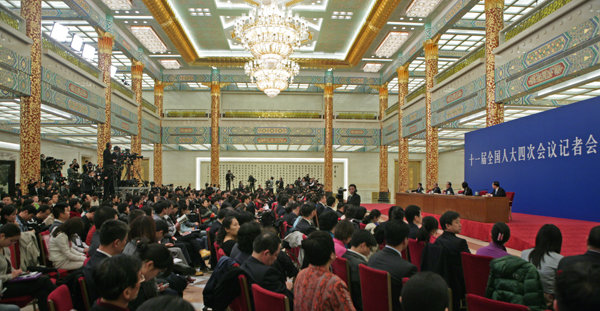
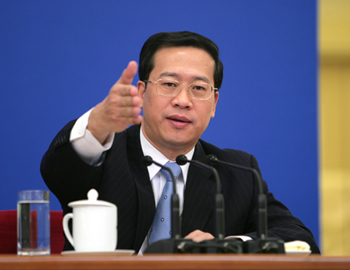
 China National Radio: Just now my foreign colleague raised the issue of rising housing prices, and you mentioned the three policy measures that the government has taken to control housing prices. We have seen that since last year, the State Council has introduced a succession of measures to bring down housing prices, and some view these measures as the harshest ever. You reiterated in the government work report that the government will resolutely regulate the real estate market. Will these measures be fully implemented, or will the government give up halfway in their implementation?
  2013. What kind of legacy do you wish to leave behind? You have on many occasions advocated political reform. Given the challenges and problems that China faces now, what reform do you advocate so that you the government can better address the problems, concerns and grievances of the Chinese people? Do you, for example, support the idea of direct elections, competitive elections on various levels of the government?
  ITAR-TASS: Good morning, Mr. Premier. I have worked in China for 18 years. I like this country very much and have got used to life here. Recently we have seen rising consumer prices. I would like to ask what is the cause of inflation. Many Russian media organizations have spoken highly of the measures taken by the Chinese government in countering the international financial crisis. They say that it is because of those measures that China has been less affected by the crisis than other countries. Do you agree with this view?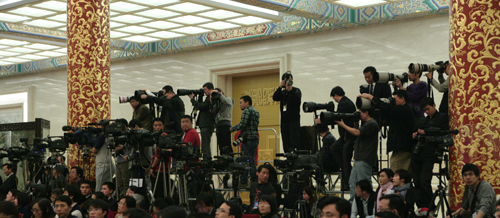
 Suggest To A Friend Suggest To A Friend |
 Print Print |
